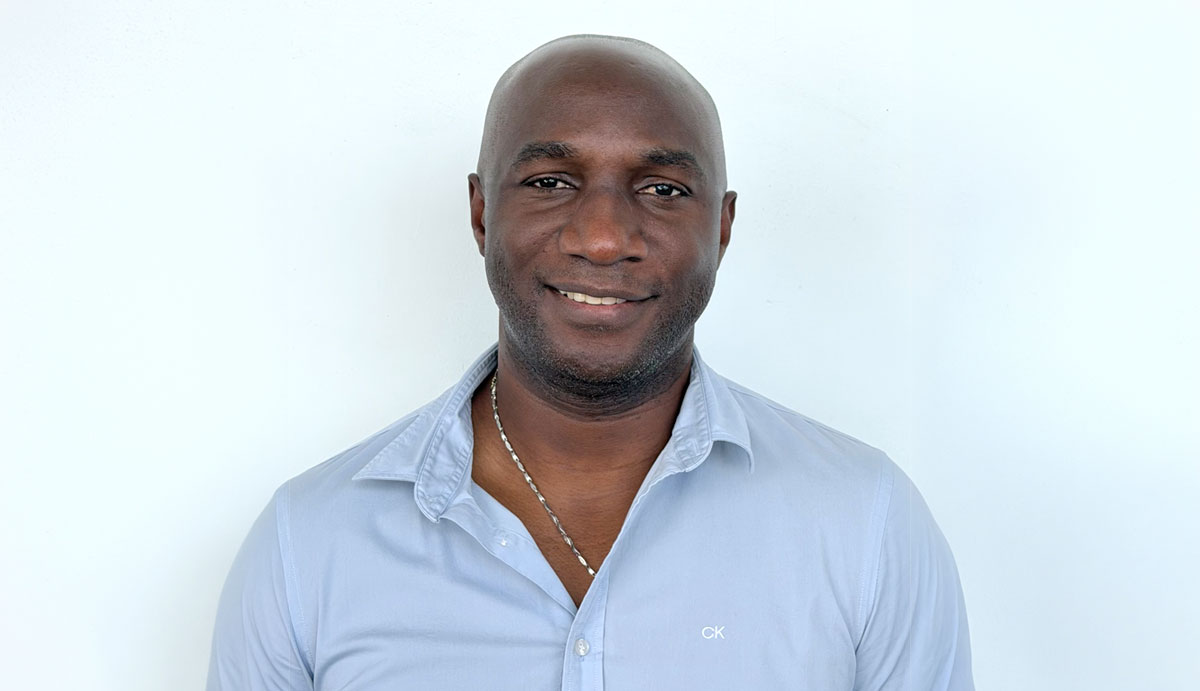
19 Jun Interview with Berto Sampi, Acting-CEO of Grassalco
Can you give us an overview of Grassalco’s mandate and evolution since 1971?
Grassalco was established in 1971 to safeguard Suriname’s strategic mineral interests, particularly bauxite, at a time when the country was asserting greater control over its natural resources. That core mandate, protecting national value while enabling responsible development, remains highly relevant today.
What has changed is the context. Suriname’s resource base is now far more diversified and global standards around governance, sustainability and transparency have evolved significantly. Grassalco has adapted by repositioning itself as a modern state mining enterprise with a broader portfolio, including gold, construction minerals and strategic mineral development. Today, our role is not only to hold assets, but to create optionality for the state by preserving value, de-risking resources through early-stage investment and enabling partnerships that align with Suriname’s long-term economic priorities.
As an important company safeguarding Suriname’s mineral resources which underpin much of its economy, how do you balance commercial performance with national stewardship?
Grassalco occupies a dual role: we operate commercially, but we do so on behalf of the Surinamese state. That balance is central to our identity. Commercial discipline ensures efficiency, accountability and credibility with partners and investors. At the same time, our stewardship responsibility means that decisions are guided by intergenerational value creation, protecting strategic deposits, ensuring fair state participation and embedding environmental and social safeguards from the outset. This dual approach allows Grassalco to function as a stabilizing anchor in the sector: commercially viable, yet firmly aligned with national development objectives and sustainable resource management.
Grassalco contributes to stability and credibility in Suriname’s mining sector by acting as an institutional constant. Governments and market conditions change, but Grassalco provides continuity, maintaining institutional memory, safeguarding legacy rights and ensuring that exploration and development are conducted responsibly.
A key example is the MaripaSton concession, where Grassalco has invested approximately $10.4 million in exploration since 2015. These efforts have significantly advanced geological understanding of the area. An additional $1.2 million is required to complete the final exploration phase needed to formally declare proven reserves of approximately 70,000 ounces. This illustrates Grassalco’s role in absorbing early-stage risk on behalf of the state, thereby enhancing the future value and bankability of national assets.
In addition to its mining portfolio, Grassalco has deliberately invested in capabilities that support sustainable land use beyond extraction. A notable example is Invitro-Plant, a fully owned subsidiary of Grassalco specializing in in vitro propagation of high-quality, disease-free plant material. Invitro-Plant operates on an 864-acre property, equipped with modern laboratories and greenhouses and is uniquely positioned to serve both agricultural development and the rehabilitation of mined-out areas. The company produces certified planting material that meets stringent phytosanitary standards, supporting food security initiatives while also enabling scientifically grounded mine closure and land restoration programs.
This dual-use model, serving agriculture and environmental rehabilitation, reflects Grassalco’s broader role as a state enterprise that looks beyond extraction and actively invests in long-term land productivity.
What is the rationale behind the Invitro-Plant and what will it mean for the future of agriculture and horticulture in Suriname?
As part of its long-term sustainability strategy, N.V. Grassalco has invested in capabilities that extend well beyond mining. A cornerstone of this approach is Invitro-Plant, a wholly owned subsidiary specializing in the in vitro propagation of high-quality, disease-free plant material.
Invitro-Plant operates on a 864-acre site that includes modern laboratories and controlled-environment greenhouses, enabling the large-scale production of certified planting material that meets strict phytosanitary standards. This infrastructure supports two national priorities simultaneously: agricultural productivity and the rehabilitation of mined-out areas.
For the mining sector, Invitro-Plant provides a reliable domestic source of planting material essential for scientifically sound mine closure and land restoration, reducing reliance on imports and ensuring ecological compatibility. For agriculture, it contributes to improved yields, reduced disease pressure and greater resilience across food and tree-crop systems. By integrating mining, rehabilitation and agriculture within a single institutional framework, Grassalco demonstrates how a state-owned enterprise can align economic development, environmental stewardship and long-term land productivity, transforming post-mining landscapes into assets for future generations
As international interest in Suriname grows, investors increasingly seek reliable local counterparts with institutional depth. How is Grassalco playing that role?
We understand the regulatory framework, the geological landscape and the strategic interests of the state. At the same time, we speak the language of international investors, risk allocation, governance standards and long-term project viability. This dual fluency allows us to structure partnerships that are credible, transparent and mutually beneficial. Foreign partners value Grassalco because we reduce uncertainty: we help align state objectives with commercial realities, creating a more predictable and investable mining environment.
How is Grasalco governed to ensure transparency and environmental responsibility?
Strengthening governance is not optional, it is essential. Grassalco has been steadily improving internal controls, reporting standards and decision-making frameworks to align with international best practices for state-owned enterprises. Environmental responsibility is equally central. Early-stage exploration under Grassalco is conducted with strict environmental oversight, ensuring that future development pathways are both socially and ecologically defensible. These efforts are fundamental to building long-term trust, domestically with communities and internationally with partners, financiers, and multilateral institutions.
What are Grassalco’s strategic priorities and targets for future contribution to Suriname and its people?
Looking ahead, Grassalco’s priorities are clear: safeguarding strategic mineral assets, selectively advancing exploration to unlock future value and positioning the state to benefit fairly from the next phase of mining development.
An important issue in this context is the Bakhuis bauxite concession. Grassalco previously held the rights to Bakhuis, a strategic asset, but lost the concession. In 2019, the government explicitly committed to compensating Grassalco for investments lost when the Lely concession was removed from the company and granted to a private party, by restoring Grassalco’s position with respect to Bakhuis.
The documentation required to formalize this restitution is currently with the Minister of Internal Affairs and is intended for submission to the president. Resolving this matter is important not only for Grassalco, but also for reinforcing confidence in the predictability and fairness of Suriname’s investment climate.
Looking ahead, Grassalco’s strategy extends beyond minerals alone. Through subsidiaries such as Invitro-Plant, the company is building an integrated approach to responsible mining, land rehabilitation and agricultural value creation. Invitro-Plant’s capacity to supply disease-free, high-quality planting material at scale positions Grassalco as a national partner not only for mining companies meeting rehabilitation obligations, but also for broader agricultural and reforestation programs. This capability strengthens Suriname’s ability to restore landscapes after mining, reduce reliance on imported planting material and align extractive activities with climate resilience and biodiversity goals.
By linking mining, rehabilitation and agriculture in a single institutional framework, Grassalco contributes to economic resilience while reinforcing international confidence in Suriname’s commitment to sustainable development.
Grassalco stands at the intersection of sovereignty and opportunity. Our mission is to ensure that Suriname’s mineral wealth translates into lasting national value, through responsible stewardship, credible partnerships, and forward-looking governance. As Suriname enters a new phase of economic transformation, Grassalco is ready to play its part: steady, institutional, and focused on building resilience and prosperity for generations to come.
Sorry, the comment form is closed at this time.