
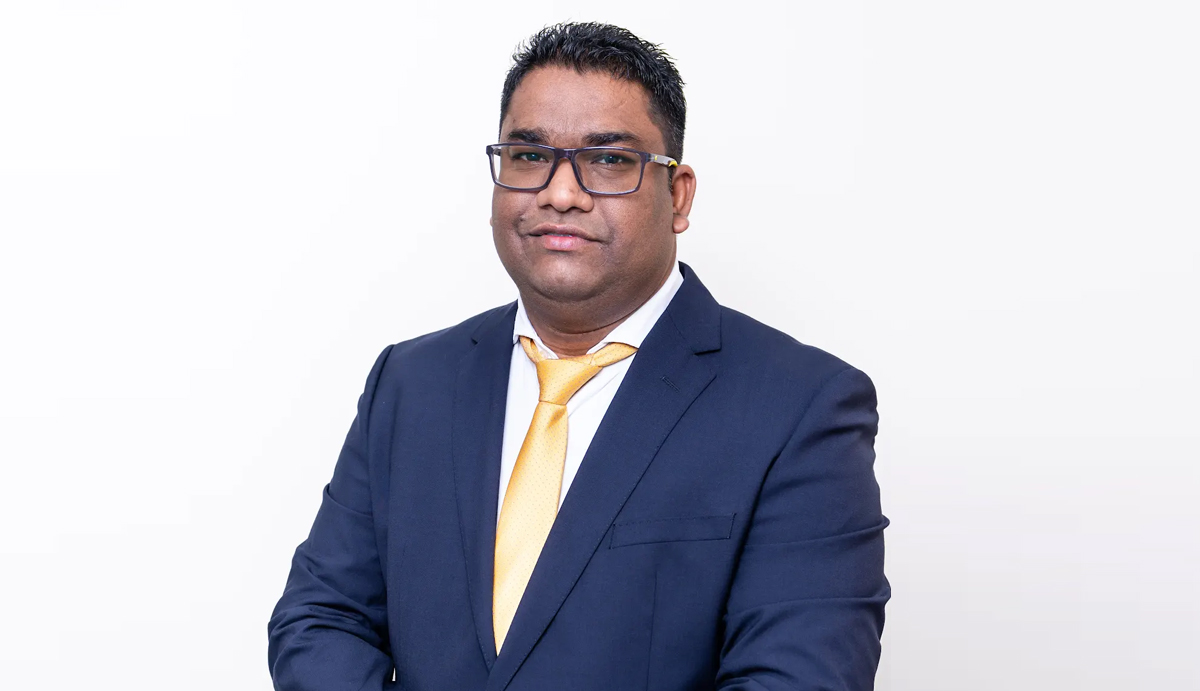
29 Jun Interview with Doric Ramlakhan, CEO of Telesur
As Suriname seeks to modernize its economy and diversify beyond traditional sectors, digital infrastructure has become a core enabler of competitiveness. How would you assess the current state of Suriname’s digital infrastructure and is it ready to support that transition?
Since 2017, Telesur has been leading a national broadband project with the government, replacing the old copper network with fiber. We are completing the final migrations in downtown Paramaribo and by the end of 2026, all corporate users will be on fiber. Today, 70% of our customers are already on fiber-to-the home. We have also upgraded our internet plans, now offering 100/100, 200/200 and 500/500 megabits per second.
Our 4G network covers the entire country, 5G is live in downtown Paramaribo and 2G was shut down last year. Telesur operates a data center and is expanding international connectivity through submarine cables. Our digital infrastructure is strong and ready to support the data demands of Suriname’s upcoming oil and gas boom.
Which infrastructure investments have had the greatest impact so far, and what upgrades are the immediate priority?
We continue to invest in both fiber and mobile networks. Fiber requires steady, long-term investment, while mobile offers quicker returns. This year, we plan a major upgrade with Cisco and Ciena to expand our core network from 100 gigabytes to over 1 terabyte. We have also signed strategic agreements with Orange and are working with EllaLink and Lum@link to increase Suriname’s international bandwidth. Over the next few years, our focus will be on modernizing our 5G network and completing nationwide 5G coverage in the capital by the end of 2027.
Founded in 1945 as the country’s national telecommunications provider, Telesur has been central to Suriname’s state building and economic development. What are the most important points in the company’s history? Can you tell us about the current structure as well as upcoming priorities?
Telesur was founded in 1945 as LTT (Lands Telegraaf Telefoondienst) under the Ministry of Public Works. In 1981, we were formalized as a company under a unique ‘sui generis’ legal form. In 2025, we transitioned to a public limited company, fully government-owned, which is more recognized internationally — a milestone achieved after 35 years of discussions with the government and parliament.
Our biggest operational milestone has been deploying fiber to homes. We are transforming from a traditional telephone operator into a digital services provider. Last year, we launched our own streaming platform, Telesur Plus, and we are expanding services such as digital payments, e-commerce and online shopping to meet the needs of Suriname’s growing digital economy.
Closing the digital divide between urban and rural communities remains a national challenge and priority. How is Telesur expanding access nationwide and what role do solutions such as solar-powered sites play in resilience and coverage?
Telesur has a nationwide network, including 74 solar-powered towers in the interior, which we design, install and maintain ourselves. These towers support not only mobile communication, but also national television and our own TV channel. In some remote areas, we are the only provider. Building these towers is very costly — around $2 million each — and they don’t generate enough revenue to cover the investment. These projects are not about profit but about providing connectivity to all Surinamese communities, reflecting our role as a state-owned company committed to universal access.
As networks expand, sustainability and energy efficiency are becoming strategic imperatives for telecom operators. How are environmental considerations integrated into Telesur’s long-term strategy and what are some key CSR initiatives that you are working on? What role can telecom enabled digital and financial services play in empowering SMEs and youth?
Telesur aligns its strategy with the UN Sustainable Development Goals, focusing on energy efficiency, education and health. We use solar panels and implement strong CSR policies. In 2025, our ‘Telesur Saves Lives’ project supported hospitals and nursing homes with funding and equipment. We also follow strict environmental, health and safety standards, which are important as we prepare for the oil and gas sector and the companies entering Suriname.
I have been CEO for a year and a half and we are working to better serve SMEs, which will play a key role in Suriname’s oil and gas boom. We are improving account management and customer service for both mobile and fixed services, including using AI in our help desk to resolve common issues faster and enhance the overall customer experience.
The development of resilient digital infrastructure often depends on international partnerships and long-term investment. How do you approach domestic and international partnerships and what makes Suriname attractive for digital infrastructure investors?
We are open to investment partnerships in Suriname and the wider Caribbean. Telesur fully owns DataSur, a Tier 2 data center, which is strategically located outside the hurricane belt, making it ideal for cloud services and disaster recovery. With the oil and gas boom, demand for connectivity will grow, creating opportunities to serve the Caribbean region and neighboring Guyana, which currently lacks data center infrastructure.
What is your vision for Telesur’s role in the country’s digital economy over the next three to five years and what is the legacy that you would like to leave behind?
Telesur supports the digital ecosystem in Suriname by partnering with other companies — we cannot do it alone. We want to fast-track the digital economy because it is the future and Suriname is currently a bit behind. I will be proud to have led Telesur’s transformation from a traditional operator to a fully digital one.
In the coming years, Suriname will be a key destination for oil and gas investment. We are open and welcoming and Telesur provides the reliable digital infrastructure companies need to operate successfully here.
No Comments