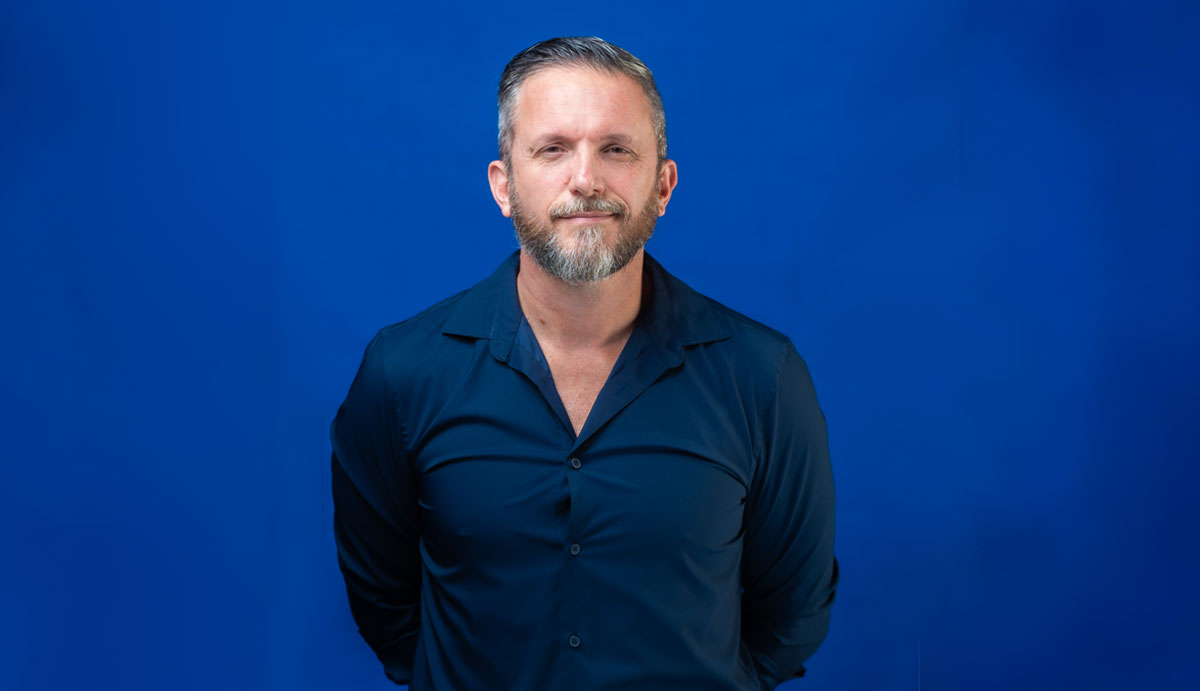
28 Jun Interview with Badwie Chehin, CEO of PPS Group
PPS, founded in 1990, has grown into one of Suriname’s leading providers of integrated security solutions, combining physical guarding, electronic systems, remote monitoring and cash-in-transit services. What was the strategic vision behind building PPS as a fully integrated security provider and how has the company evolved as Suriname’s security environment and economic landscape have changed over the past three decades?
Suriname is still considered a third-world country, which reflects the country’s historical limitations in technology and modernization. For many years, we were several steps behind more advanced nations. That began to change in the 1980s and 1990s, when we closely followed developments in the U.S. and Europe and anticipated what would eventually reach our market.
As a family-founded company with strong standards and values, we made a deliberate decision to position ourselves ahead of the local market. We invested in high-quality personnel, services and systems to meet the international standards that were gradually entering Suriname, particularly as multinational companies began operating in the country. We also partnered with international firms, not only to provide services locally but to learn from them. At the time, Suriname lacked sufficient local expertise, so these collaborations were essential to our growth. The first 10 to 15 years were challenging and we reinvested all profits back into the company rather than for personal use. That discipline has paid off.
Last year, we celebrated our 35th anniversary. Over the past decade, we deliberately expanded our services under PPS in anticipation of developments in the oil and gas sector. Today, as international companies enter Suriname, we are positioned as a comprehensive security provider and continue to stay several steps ahead of the competition, with plans to expand internationally in the near future.
Which operational upgrades or technological investments have most significantly strengthened client trust and service quality and how do you see the balance between manpower and technology evolving in the security sector?
We have a remote security center with several sub-departments all operating 24/7. We have a video monitoring center that uses highly intelligent and advanced monitoring software. We also have an alarm processing center, which is recognized worldwide. Connected to that is our dispatch center. Strategically, we have seven dispatch centers throughout Paramaribo, which allows us to maintain very fast response times whenever a client’s alarm is activated. We are very proud of this setup and it continues to operate successfully. We have been tracking our vehicles since the 1990s and now we are expanding to provide comprehensive asset tracking. This includes vehicle tracking, as well as tracking phones, tablets, or any asset that can be monitored. Our new asset tracking services will offer more advanced solutions than what is typically available in the market.
We continue to innovate by implementing smart software in our video monitoring center. This software is used by leading global security companies, including G4S, and meets international standards. We recently upgraded from a single application to a much more advanced system, which will significantly expand our capabilities. Additionally, we have implemented workflow software to streamline personnel management. With around 600 employees across multiple departments, coordination is critical. This software allows departments to interconnect more efficiently, reduces paper usage and supports our efforts to operate in a more environmentally conscious way.
Currently, achieving balance in workforce performance remains challenging because Suriname is still officially a third-world country. While there have been significant improvements in the workforce due to government and organizational efforts, the education system still has room for growth, creating a gap in skilled personnel. We prefer to work with local employees when they have the required skills, but with multinational companies entering the market, we often have to consider expatriates. Even when using local talent, challenges remain. Cultural differences, schooling limitations and experience gaps can make it difficult to meet the performance levels required by large international companies. To address these challenges, we have been automating services wherever possible, reducing reliance on personnel. While it is not ideal, automation is necessary to maintain consistent performance. We are actively exploring systems that can further support these efforts.
The gap between knowledgeable and less experienced employees in Suriname is significant and many local companies face similar difficulties. Multinationals often recruit the most skilled employees, which benefits the individuals but creates retention challenges for local companies. We are fortunate to have a strong core of loyal management personnel who have been with us for 15, 20, or even 33 years. Their loyalty often outweighs financial incentives elsewhere. We have consistently invested in employees who demonstrate dedication and high performance. For us, retaining and developing talent has never been solely about money; commitment, skill and alignment with our values are equally important.
As Suriname enters a new phase driven by offshore developments, expanding private enterprise and increased foreign business activity, security requirements are becoming more complex and structured. How is PPS positioning itself to meet the needs of multinational companies and large industrial clients entering the market?
We are positioning ourselves as a one-stop shop for security services, specifically at the level required by corporate clients. Our goal is to serve as a corporate security partner for both large international companies entering Suriname and for local businesses. While there are many security companies in the country, approximately 200 in total, it was crucial for us to define our positioning early, even before this wave of new companies arrived.
This year marks the 10th year of our focused effort to establish ourselves as a corporate security partner for these corporate clients, which is why we have made substantial investments over the past decade. Many of these investments have not yet fully yielded returns, but we made them deliberately, anticipating that within a few years, they would set us apart and allow us to meet the high standards required by larger companies. Early indications suggest that these investments are beginning to pay off, which reinforces our strategy and commitment.
Are security expectations from international investors materially different from those of domestic clients?
There is not that much difference from what has already been requested. We have consistently been providing core services such as security officer coverage and transportation of executives and personnel to and from work. We have received a few inquiries about providing security services offshore, at platforms. This is an area where we have not yet invested time or resources, as it is currently being handled by companies in Trinidad and other regions. If we are approached by companies willing to support training and help establish an offshore security department, we will certainly pursue it. I am confident that we can provide these services if we have the time and resources to properly set them up.
Security services are often an invisible but critical pillar of economic growth, particularly in emerging markets. What role do you believe professional security providers like PPS play in supporting investor confidence and overall business stability in Suriname?
Security is largely invisible, but we are currently in discussions with a number of security companies. There is not yet an official platform for collaboration among security providers. Companies do not regularly come together to discuss common challenges or share insights. At the moment, we are in the process of establishing such a platform. We are gradually gaining interest from more companies to work together and explore collective solutions.
Some companies operate only a few vehicles, while others have 20, 30, or 40 vehicles on the road. We operate approximately 45 to 50 vehicles. It would be a missed opportunity if the government, particularly the police department, did not leverage our presence as additional eyes and ears on the road 24/7. By coordinating our vehicles with those of other companies, we could prevent or reduce a significant number of crimes and address other safety hazards. This initiative requires a team effort involving the most serious security companies, the police and larger corporate clients.
Over the years, we have learned a great deal about the needs of multinational companies, which often have stricter safety and security requirements than local businesses. They are highly protective of their employees and families. Even now, we are already playing a significant role, providing certain information to our clients to help them assess potential risks to personnel and operations. Other security companies do this as well for their clients, but our goal is to expand this into a coordinated team effort. The timing is right for such collaboration. While crime in Suriname is not particularly high and is usually nonviolent, there is still work to be done to strengthen overall safety and security.
Are local competitors supportive of this initiative to come together on a platform, or is there still some reluctance?
We are targeting a government representative, but the police are not yet involved. Our priority is to bring allsecurity companies together and reach an agreement on what needs to be done and how it should be done. Once that is established, the other stakeholders will join in. This initiative has been attempted since the 1990s, but has not succeeded until now. Our approach is to first get the companies to collaborate, ensure everyone agrees on the objectives and procedures and then involve the other stakeholders to create a coordinated effort.
The security sector globally is experiencing rapid innovation, from smart surveillance to integrated risk management systems. How does PPS approach partnerships with international technology providers or security firms and what type of collaboration is most valuable for long-term development?
We have always been open to partnering with international companies, depending on the nature of the partnership. For example, we have partnered with Brink’s for the past 15 years and with G4S from 2004 to 2011. We also work with a few other large international companies. These partnerships are important because they are several steps ahead of us in terms of expertise. They teach us a lot, bring us up to speed and help us grow. At the same time, we assist them in understanding how to do business locally, as they are not familiar with Suriname.
There is still significant work to be done in Suriname when it comes to security. While local companies perform well, services related to information gathering and intelligence are lacking. We are currently in discussions with a large international company to expand these services. Although we are operating on a small scale, there is a growing need for intelligence services. These services are essential for incoming companies and while local providers exist, many multinationals are not fully satisfied with the current options. They use them out of necessity, but the quality and expertise are not always sufficient.
Regarding offshore security, a few companies in Suriname are attempting to enter this space. One is pursuing it aggressively, but we are uncertain about their level of success. In personal protection, beyond traditional bodyguard services, there is also considerable opportunity. Many companies can place uniformed personnel next to executives, but true effectiveness requires personnel who can think, react and act appropriately in dynamic situations. Personnel training needs to be broad and in-depth, especially regarding mental preparedness. While there are many armed individuals, their ability to handle high-pressure scenarios safely is often limited. This is an area with significant potential for improvement and represents a real opportunity for companies willing to invest in quality training and services.
What are your key priorities for PPS’s next phase of growth and where do you see the next major breakthrough or defining opportunity emerging within Suriname’s security sector?
What we are working on now is alarm processing and response in other countries, but managed from here. With technology and the internet, we could establish an agreement with a dispatch service and a quick response company in China. When we receive the signal, they are contacted and dispatched. It is that simple. We are exploring whether companies in Curaçao, Aruba, Guyana, or Trinidad would be interested in being notified by PPS in Suriname about alarm situations and responding.
The same applies to asset tracking, which can be managed from anywhere. These are opportunities for us and other companies to provide services throughout the Caribbean and French Guiana. These represent the international opportunities we are focusing on at this time, all within remote security. We have also considered expanding by establishing an office in Guyana for security operations, but managing personnel from Suriname is already challenging. We are therefore evaluating whether it is more feasible to continue operating remotely from here for other countries.
Once you step out of your post, which is the legacy that you would like to leave behind? What achievement would you feel more proud of?
The fact that I was able to grow the company further is already very meaningful to me. My father and one of my older brothers started, laid the foundation and set up a few of the initial departments. I am the youngest. Both my father and brother have passed away and I took over as CEO a few years before my father passed. For me, the goal was simply to grow the company, attract a few major multinationals and upgrade the remote security center.
Back then, it was focused only on alarm processing. Today, we provide video monitoring, vehicle tracking and a range of other services. If I were to step down now, knowing that these additional departments and services are functioning well and that others are in development, I would be satisfied. I still believe that my father and brother are watching and listening and that they see their efforts were not in vain. They did their part, established the foundation and left it for someone else to continue growing.
What is your final message to our readers?
Let them come and have a few discussions with the security companies and government agencies responsible for providing a safer Suriname. They would be surprised at how much is already being done and how far we have come. It is also important to note that, compared to the region, the level of crime in Suriname is relatively low. While crime exists and is never acceptable, the overall level is manageable.
Beyond security, Suriname is a cultural melting pot. People of all colors and backgrounds live here and traditional customs are still very much present. You will see individuals in traditional clothing and communities practicing their cultural traditions. It is both simple and beautiful. Suriname continues to have significant potential for growth. For those coming to work or live here, this adds real value. In many larger countries, life moves at an overwhelming pace and cultural authenticity is often lost. Suriname offers a balance of opportunity and tradition. There are many possibilities available now, similar to opportunities people have accessed in Europe and other parts of the world. We are entering a stage where substantial development is about to take place and the sooner you engage here, the sooner you can secure the opportunities you are seeking.
No Comments