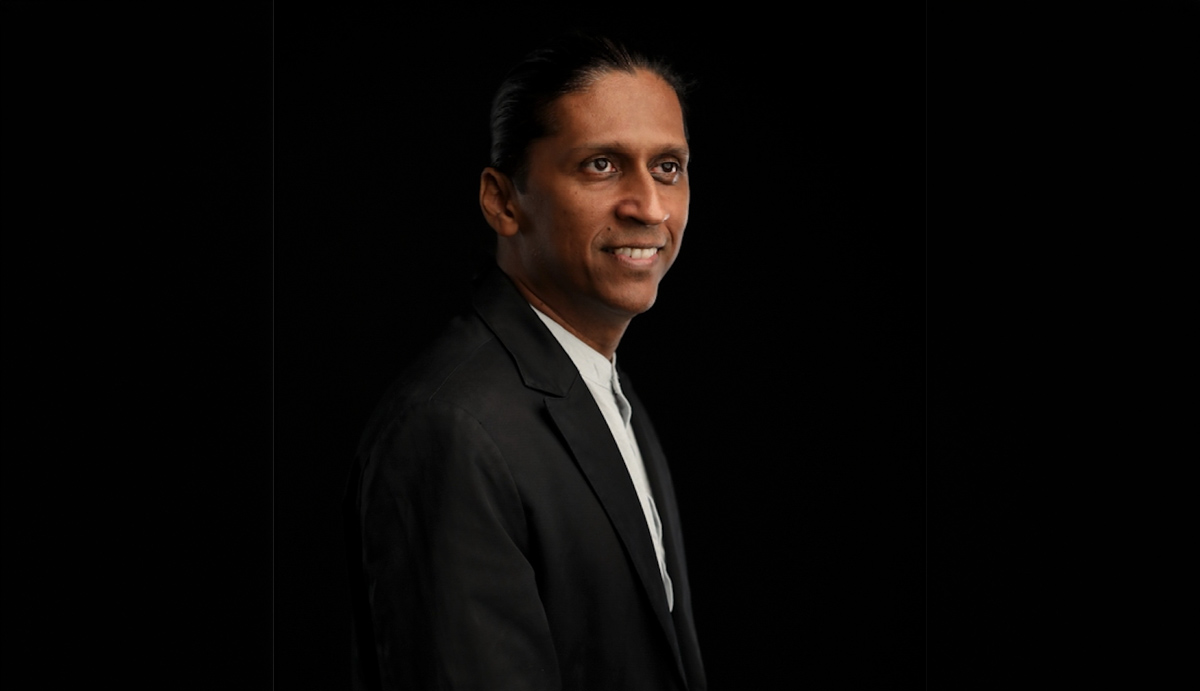
26 Jun Interview with Ignaz Ahmadali, CEO, Fairali Design Engineering Consultancy
Fairali Design Engineering Consultancy operates as a multidisciplinary cross-sector development firm. What was the original vision behind establishing the company?
We are a design engineering consultancy that develops projects proactively instead of waiting for governments to publish tenders. When we identify policy challenges or goals in the public or private sector, we focus on creating efficient, integrated solutions tailored to those needs. This approach makes us unique in Suriname and the wider region. For example, we are currently working on projects in affordable housing, energy and agriculture across six to seven Caribbean countries, including Suriname. These sectors face connected challenges, but they are rarely addressed together. We bring them into one integrated solution.
From the beginning, our vision has been to work differently by building partnerships between governments and the private sector. Rather than waiting for opportunities, we develop projects ourselves, help secure financing and support implementation so all stakeholders benefit. We call this approach design, build, finance and operate — a complete project chain. Especially after COVID, when starting projects became more difficult for both governments and companies, we increased our support by using our international network across technical, administrative and funding sectors to help turn ideas into reality.
Engineering and consultancy firms today are expected to deliver not only technical expertise but also strategic planning and project management capabilities. Which capabilities or areas of expertise have been most critical in building client confidence and delivering successful projects?
With more than 25 years of international experience, we specialize in architectural and structural engineering, infrastructure, urban planning, real estate, green energy and agriculture. Our strength is combining these sectors into integrated, tailored development solutions with broad impact.
In agriculture, we do not focus on training people how to plant crops. Instead, we work on improving efficiency and developing land in sustainable and integrated ways to maximize its value. Our vision connects housing, infrastructure and job creation. By creating employment opportunities, people can access mortgages and improve their living conditions.
Over time, we have become especially strong in affordable housing because we look beyond single-sector solutions. Suriname’s economy is still largely driven by oil and gas, but we also focus on what comes next — the second, third and fourth development cycles. Paramaribo has the highest concentration of formal jobs, which makes it easier for people there to qualify for mortgages. Nationwide, however, there is a housing shortage of about 30,000 homes, and many people without formal employment cannot access financing. In the interior, the situation is even more serious, with several generations often living in one house. That is why affordable housing is not just about buildings — it is a solution that supports economic opportunity, stability and quality of life.
We also have strong expertise in business planning and support companies that want to grow by improving efficiency — not just what they do, but how they do it and how they can scale sustainably. As Suriname develops rapidly, especially with growth in the oil and gas sector, it is important to look at the wider impact on society. For example, we are working on initiatives that connect construction projects with workforce development, including training programs for people who are currently outside the formal job market. One example is supporting rehabilitation programs for people in detention by training them in construction skills such as timber work and painting. When they return to society, they can continue working, earn an income and even qualify for housing opportunities. This helps reduce unemployment while addressing Suriname’s housing shortage.
Although construction is our main focus, we also invest in training young people, early school leavers and workers from the interior who need practical skills. By providing training and certification, we help bring them back into the workforce. Everything is connected. Our goal is to create solutions that support both economic development and social progress — a win-win for everyone.
Are there specific competencies or technologies that Fairali is currently investing in to strengthen its service offering?
Innovation is very important to us. As part of change management, we focus on integrating ideas and continuously improving the way projects are designed and delivered. I graduated in prefab and collective construction, so I am always looking at how existing building systems can be developed further and applied more efficiently. For us, innovation is not only about building faster or smarter though. It also involves leadership, materials, financing and managing the entire project chain. Everything is connected, and progress needs to be balanced to ensure quality and reliability. We continuously invest in both internal and external development to improve our methods and products. Our goal is to deliver solutions that are better for the market and, most importantly, safe and reliable for the end users — because their satisfaction is what defines the success of a project.
Infrastructure and real estate development often require close coordination between engineers, architects, investors and public authorities. How do you coordinate collaboration across the different parties involved in a project to ensure efficient execution and long-term sustainability?
Partnerships are essential to what we do. When projects involve land development, housing, materials, green energy, training and financing, it is not realistic to do everything alone. There is no need to reinvent the wheel — we focus on improving and accelerating what already works by bringing the right specialists together. We collaborate with technical experts, investors, governments and private companies to manage the full project process and keep timelines on track.
Every project requires a different structure and leadership approach, sometimes from the top down and sometimes closer to the operational level. We also work with different types of funding partners, including investors, lenders and grant providers. The key is to combine these resources in a way that benefits everyone involved. Strong collaboration allows us to achieve larger goals. By working together and using each partner’s strengths, we can deliver better and more sustainable results.
Suriname is at the beginning of development across many sectors. In larger countries like the U.S., if you start a new business or initiative, you are rarely the first — there are already many examples to follow. In Suriname, however, there is a real opportunity to shape things differently from the start by learning from global experience. We can also learn from neighboring Guyana, which is developing rapidly. By observing what has worked well and what has been challenging there, we can make smarter decisions for Suriname’s future. We do not see mistakes as failures, but as lessons that help us adjust our mindset and move forward to achieve our goals.
As markets expand and urban environments continue to evolve, the demand for well-planned and resilient infrastructure is increasing. How would you assess the most pressing infrastructure and development priorities in the region today?
One of the most important questions in the region today is what truly makes people feel secure and happy. From our experience, it starts with basic needs like water, food, education — and especially housing. People feel safest in their own homes. When families cannot afford stable housing, social challenges increase. Since returning to the region in 2001, our main goal has been to support affordable housing for families who need it most. Over time, we also studied housing needs across the Caribbean. Our research shows there is a shortage of more than 1 million homes across the Caribbean islands. For example, Suriname needs about 30,000 homes, Guyana around 50,000 and the Dominican Republic about 230,000. That is why we focus on developing affordable housing solutions across the region, mainly for low- and middle-income families, while higher-income groups usually have access to their own options.
Housing is a key foundation for social stability and long-term development, and collective construction is essential to solving the region’s housing shortage. In many countries, including Suriname, the main challenges are access to financing, supportive policies and effective housing systems. Rental housing alone often does not create ownership or long-term stability, and without proper maintenance support, living conditions can decline over time. After COVID, when people spent more time at home, governments across the region recognized the urgency of improving housing conditions. Our focus now is to support governments in developing housing programs, including policy adjustments, social mortgage systems and housing corporations similar to those in the U.S. and Europe.
Another major challenge is energy. Building more homes increases demand for electricity, while many countries already face shortages. That is why we integrate green energy solutions, such as solar projects, into housing developments. At the same time, employment remains a key issue. As you move further outside major cities, fewer people have formal jobs, which makes it harder for them to qualify for housing. That is why housing, energy, financing and job creation must be addressed together as one integrated solution.
A further challenge in the region is how agricultural land is used. In countries like Suriname and the Dominican Republic, many farmers have land but cannot easily expand because surrounding plots are already occupied by other small farms. Furthermore, nearby housing projects need land and energy solutions. One approach we support is integrating agriculture with technology — for example, combining solar energy with greenhouse farming and hydroponics. By farming vertically inside greenhouses, production can increase significantly without needing more land. This creates jobs, supports housing development with nearby energy solutions and increases agricultural output at the same time. We also connect farmers with export partners that guarantee the purchase of their products. This gives farmers stable income, creates employment and helps families qualify for housing. It becomes a complete development cycle where agriculture, energy, jobs and housing support each other. For many Caribbean islands, agriculture is especially important because reducing food imports strengthens the local economy.
If housing is developed only as rental projects without ownership opportunities, long-term quality often declines. Ownership encourages maintenance, stability and stronger communities, which is why integrated solutions with homeownership are so important for sustainable development in the region. Our main focus is simple: people feel safest in their own homes. That is why we work on reducing the housing shortage while also developing complete communities — not just houses. We include urban planning elements such as schools, parks and public facilities so people can live, work and enjoy their environment. Depending on the country and project size, we also plan space for commercial areas like small shopping centers.
How are sustainability principles and modern engineering standards incorporated into the projects you undertake?
Sustainability starts at the design stage. We consider how buildings respond to climate — keeping houses cool in warm regions and warm in cold regions — by using sunlight, wind and material selection effectively. In our region, wind orientation and natural ventilation are especially important. We also conduct environmental and social impact assessments for every project, as required by governments. Sustainability is not only about energy, but also about water, waste management, agriculture and job creation. Even employment must be sustainable, especially when people are financing homes long-term.
Our approach covers the full lifecycle: from land development and construction to living conditions, energy use and systems like wastewater recycling and resource management. For larger developments, we design integrated smart-city concepts where housing, energy, water, waste, green construction and digital infrastructure are combined into one system. This only becomes truly effective at scale — thousands of homes, not small, scattered projects.
Today, sustainability is not optional; it is a necessity for every project we develop. Sustainability also requires a mindset shift, especially in energy. Solar power is a good example. In many cases, people understand the idea, but they need to experience the benefit directly. Therefore, we integrate solar energy into housing projects from the start. Instead of asking people to invest in it separately, the cost and savings are built into their home price so they immediately see the difference in their monthly energy bill. When people notice they are paying less while others pay more, adoption increases naturally.
In Suriname, energy systems like net metering already exist, where households can produce electricity and pay only for the difference in the amount they consume. This shows that the transition is already beginning. We also align housing development with national sustainability goals, including solar and wind energy. In larger projects, rooftop solar alone is not always enough, so we also design supporting energy systems where needed. The goal is to make renewable energy a standard part of every new development, so sustainability becomes practical, visible and widely accepted.
Engineering consultancies often play a key role in facilitating investment by translating technical concepts into viable projects. What role do you see firms like Fairali playing in supporting private-sector investment and long-term economic development in the region?
Development in the region follows a normal country-by-country growth path, but many sectors tend to stay within their comfort zones. Across Suriname and the wider region, there is a new generation of leaders and thinkers who are more open to innovation and out-of-the-box solutions. Most countries here still rely partly on external financing. Even wealthier nations carry debt, so collaboration with international development banks such as the Inter-American Development Bank, Caribbean Development Bank, World Bank and various export-import banks is normal practice. These are mainly used for government-to-government financing and large-scale infrastructure.
However, the private sector operates differently. Small and medium-sized businesses — who make up the majority of economic activity and employment — often depend on local banks with high interest rates and there is limited access to affordable financing. This creates a significant gap and risk for entrepreneurs who want to grow but lack support. Strengthening access to finance for the private sector is therefore essential, because sustainable development depends not only on governments, but also on the businesses that drive the real economy. Access to expertise at all levels is very welcome in Suriname and the region, especially in production systems, engineering and project development, but we also need access to sustainable financing — not short-term, high-interest solutions, but long-term funding models that support private sector growth.
Investors who understand local realities and economies are essential. Development is not a straight line; it requires flexibility, adaptation and step-by-step progress toward a clear goal. At the same time, collaboration must go both ways. International partners bring capital and new approaches, while local professionals bring experience, context and knowledge of what works on the ground. The most successful projects we have delivered over the past 25 years were built on honest dialogue and mutual understanding.
We also see that speed matters. If we try to develop everything alone, progress may take decades. With the right expertise and cooperation, we can move faster and more efficiently while still staying realistic. Suriname has strong human capital, including well-educated professionals in engineering, law, medicine and economics, many of whom study abroad and return with new perspectives. Combined with improving legislation and increasing private-sector involvement, this creates real potential for faster, more sustainable development.
What is your final message for our readers?
In business, you need to trust your intuition, but within a clear structure. Private sector business is different from government-level engagement, which requires proper channels and due diligence. In Suriname, there is sometimes a tendency for investors to go directly to the highest political level, but the correct process is to start with the relevant ministries or institutions, while the president focuses on policy. This ensures efficiency and transparency. We welcome international investors, but engagement must be well-prepared and based on mutual understanding. Every market carries risks, even in Europe, and success depends on timing, structure and long-term commitment.
With oil and gas development already progressing, Suriname is at a critical moment — waiting too long may mean missing investment opportunities. The key question is not whether to invest, but how to invest in a way that creates local value: jobs, production and skills transfer. Instead of exporting raw materials, we encourage investors to build production facilities locally, as Suriname is facing huge growth and we need to prepare. Not everything needs to come from outside, which is why we are currently working with international and local companies in the circular economy, turning waste into final products we will use in housing construction and food chains. This is how investment becomes long-term economic growth for everyone.
When companies want to invest, we help by developing business plans, connecting them to the right partners and guiding them through the investment processes. Over the years, we have supported more than 180 companies entering Suriname and the Caribbean.
Suriname is a small, but very open market of around 600,000 people. There is room for competition, but the focus is also on export and value creation. The government is encouraging green and local production for both domestic use and export, which creates a lot of opportunities. In many cases, companies are now coming directly to us. Our approach is simple: help investors feel confident, think long-term and create win-win solutions that generate value for both Suriname and its partners.
No Comments