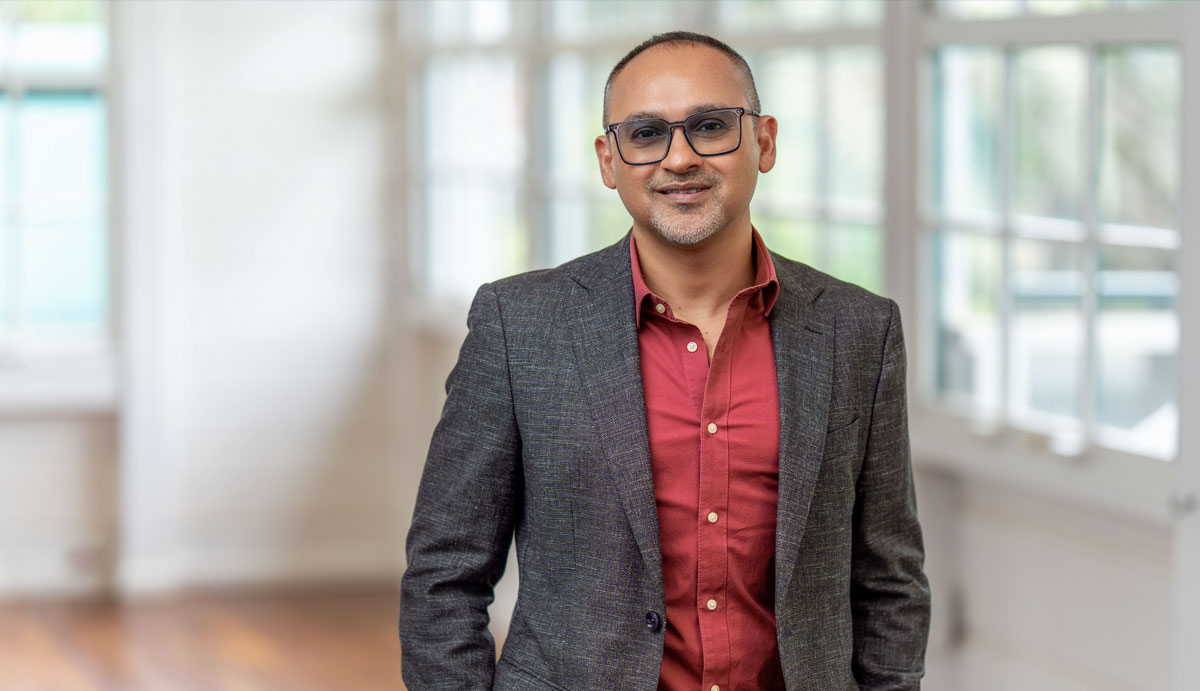
15 Apr Interview with Mario R. Merhai, Group CEO of Assuria Group
Founded in 1991, Assuria stands as the country’s largest insurance group and a key long-term institutional investor. How do you reflect on Assuria’s evolution over the past decades and what elements of its history and institutional culture have been most decisive in shaping its leadership position today?
The idea of the founding fathers in 1991 was to bring together several insurance and investment companies under one group. Initially, there were two general insurance companies and one life insurance company, plus the National Investment and Finance Company, which was later renamed Assuria Investment Company. These were consolidated into Assuria General Insurance, Assuria Life Insurance and Assuria Assessment Company, all under the Assuria Holding.
From the start, Assuria established a strong presence not only in insurance but also as an investor in key sectors of Suriname’s economy. For example, the investment arm held shares in the largest hotel group, Torarica, the local brewery, the local paint company and other manufacturing businesses. This dual focus — insurance and strategic investments — gave Assuria a significant role in the economy.
Our vision has always been to be a local company with a solid financial foundation, contributing to economic growth through private entrepreneurship while remaining independent from politics. We see a direct link between the growth of the local economy and the success of our insurance business, which has guided our growth strategy over the years.
What led to Assuria pursuing international strategies and how successful have your moves into Guyana and other countries been?
In recent years, we developed a strategy to expand beyond Suriname due to its history of economic volatility — high inflation, currency instability and political upheaval since the 1980s. Despite these challenges, we grew steadily, achieving market leadership in life insurance with about 85% market share and around 40% in general health insurance. Recognizing the limits of a stagnant economy, we began looking abroad.
In 2012, we entered Guyana — years before its oil boom — and positioned ourselves ahead of the curve. Today, the Guyana operation is our fastest-growing, with over 54% growth in premium income in 2025, benefiting directly from the country’s economic expansion. Since then, we have also expanded to Trinidad and Tobago and the Dutch Caribbean (Curacao). Our vision is to become a Caribbean player while consolidating our leadership in Suriname. Our Dutch heritage and CARICOM membership make us well-positioned to operate across both Dutch and English-speaking markets, with a strong presence in Suriname and Guyana. We are comfortable operating in multilingual and multicultural Caribbean markets.
The main challenge remains Spanish-speaking territories. French Guiana is also difficult because EU regulations prevent non-EU insurers from selling coverage there. Previously, we offered cross-border motor insurance between Suriname and French Guiana, but this was halted by legislation. In contrast, we have created a seamless “2-in-1” insurance policy for Guyana and Suriname: a car insured in one country is automatically covered in the other. I strongly support better connectivity between the two countries — whether through a bridge or improved ferry services — to enhance trade, cooperation and economic integration. With over 1.5 million combined population, shared resources and complementary opportunities, Suriname and Guyana could benefit from joint investments, coordinated local content policies and a unified market, avoiding duplication and creating more opportunities for businesses and citizens alike.
Your headquarters are a landmark within Paramaribo, representative of your driving vision and ambitions for Suriname and the region. How successful has the building been in lifting your profile and attracting other tenants?
Originally, our offices were in central Paramaribo, but as part of our long-term vision, we wanted to demonstrate that even in a developing country like Suriname, a company could operate in a modern, exemplary workspace. Our old offices couldn’t support the transformation we envisioned and the city center was becoming increasingly congested. We decided to develop a new office project in a growing part of the city, leading to the Assuria Hermitage High-Rise. This project was not just about business — it was about giving back to the community and creating a landmark Surinamese building. We held a contest for local architects, with a selection committee of Assuria staff, local artists and engineers. The winning design was inspired by an iconic film from Suriname’s independence era, symbolizing our commitment to building the nation. This project marked our entry into commercial real estate. Soon after completing the building, we received many requests from international tenants seeking modern office space, which led us to enter the commercial rental market. The building is iconic on the outside and also includes a 750-person event center with full facilities — dressing rooms, a lift and a podium — designed for shows, conferences and other events, giving back to a country with limited theater venues.
After the success of this project, we built a second building. Today, both are fully rented, with TotalEnergies as our main tenant, reflecting the demand for modern, high-quality office space in Suriname. Starting in March, we will begin construction on the third tower of the Assuria Hermitage High-Rise project, which was always designed for three towers. Our goal is to create an excellent office experience while providing commercial space for companies supporting Suriname’s growing oil and gas sector. With our own funds and debt financing, we have invested nearly $70 million in this complex — a risk, since rental is never guaranteed. However, we believe in Suriname’s future. We hope to achieve sustainable growth, learning from countries like Guyana and focus on long-term investments that benefit both the economy and the community.
I would encourage our government to study models like Norway and Chile, which have successfully managed resource wealth by building strong institutions and long‑term fiscal frameworks. In Suriname, governance and transparency remain challenges and if oil revenue isn’t managed well, there is a risk it could benefit only a small elite rather than the broader population. That is why strong frameworks — like sovereign wealth funds, anti‑corruption laws and fiscal rules — are so important. They help ensure transparency, accountability and sustainable use of oil revenues rather than short‑term spending. I hope international partners, including the International Monetary Fund and Inter American Development Bank and our trade and investment partners, support the government as it strengthens institutions and manages this transition responsibly. This way, Suriname’s growth benefits the economy and its people over the long term.
Assuria’s expansion into Guyana, Trinidad & Tobago and Curaçao reflects a more outward-looking phase in the group’s development. How important are foreign direct investment and international partnerships to Assuria’s growth strategy and what is your longer-term vision for the group’s role in the regional insurance landscape?
For Suriname, foreign investment can be a major catalyst for development, not just in oil and gas but in tourism, ecotourism, sustainable mining, agriculture and back-office services. With 93% of the country forested, there is huge potential for responsible development. The workforce is small but multilingual, fluent in Dutch and English, with Spanish and Portuguese speakers, which supports diverse industries.
We also see opportunities in infrastructure, banking and insurance, though legislation often limits foreign participation — for example, the banking law caps foreign ownership at 20%, discouraging investment. Tax laws and investment incentives need modernization to treat local and foreign investors equally. With the right legal framework, Suriname could attract significant, sustainable investment, without too much difficulty or expense. For example, adding a small $20 airport tax to support the Suriname Hospitality and Tourism Association could help develop the basic infrastructure needed to attract tourists. It is not enough to talk about tourism — we need the facilities and services in place to make it a reality. Overall, the opportunities are there, but the basics must be addressed first.
From an insurance perspective, there is a significant opportunity. Some companies are still majority-owned by the government, but private players like Assuria need capital and support to expand locally and abroad. We have supported Suriname’s insurance needs through difficult times, so policymakers should protect local companies from market distortions as the economy grows. At the same time, collaboration with foreign players is important. We already have strong international relationships — with global investment banks, reinsurers, brokers and actuaries — so growth benefits both local and international partners.
I am open to conversations with anyone interested in doing business with us. We are actively pursuing growth opportunities in the Caribbean. In Guyana, we are expanding both our insurance business and real estate investments, contributing to the country’s development as we grow. We have identified two territories outside the Caribbean: Brazil and the Netherlands. Brazil connects economically with the Guyanas, while the Netherlands is a natural fit due to our strong ties, diaspora and the education of our executive team. It also gives us a foothold in a mature, developed market. We aim to balance investments across emerging, developing and stable markets.
No Comments